
Port Hedland led regional house price growth in March 2026 quarter
27 May 2026"REIWA Regional Spokesperson Peta McKenzie said 6.9 per cent growth was incredible and reflected the imbalance between demand and supply in the region."
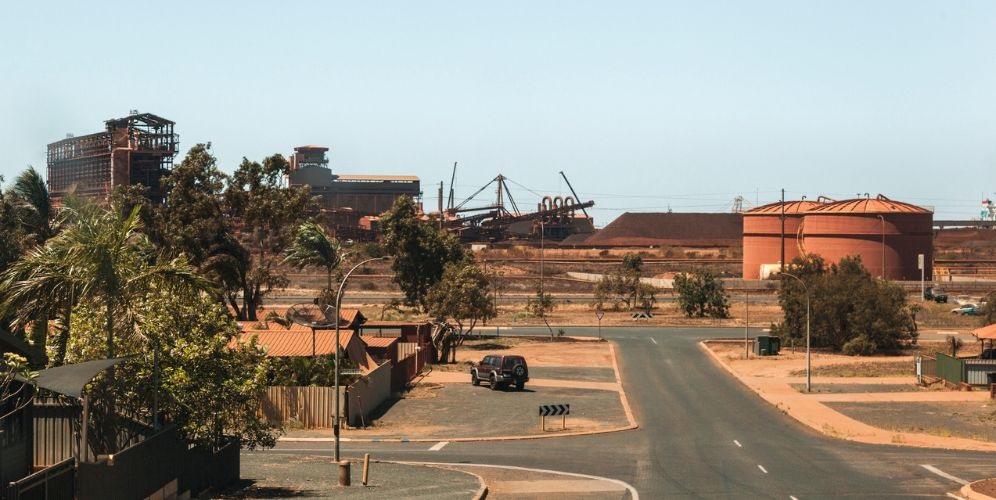
Port Hedland was the top performing regional centre for median house sale price* growth in the March 2026 quarter, according to the latest data from REIWA.
Its median house sale price rose 6.9 per cent to $590,000 over the three months to March, up from $552,000 in the December 2025 quarter.
REIWA Regional Spokesperson Peta McKenzie said 6.9 per cent growth was incredible and reflected the imbalance between demand and supply in the region.
“Members reported strong demand but a shortage of property for sale in the March quarter, with available properties selling quickly and achieving good prices,” she said.
“This has continued into the June quarter, with appropriately priced properties selling for at or over the asking price.
“Buyers are a fairly even mix of investors and owner occupiers. Port Hedland is quite attractive for investors as the potential yields are higher than you will find in many other markets.
“It is also possible for investment properties to be neutrally or positively geared. Changes to the capital gains tax discount and negative gearing announced in the Federal Budget may also draw more investor attention to regional markets like Port Hedland.”
Ms McKenzie said demand was expected to remain strong, with potential mining projects likely to attract people to the region.
“BHP has made significant investment in infrastructure projects recently and has more to come in the next few years,” she said.
“Northern Star’s purchase of the Hemi Development Project could create around 1,700 jobs during construction and operation if the project is approved.”
Albany was the top performing regional centre over the year, with its median house sale price increasing 24.4 per cent since the March 2025 quarter.
Ms McKenzie said the Albany regional centre was dominated by owner occupiers, with constrained new listings, similar to conditions seen in Perth earlier this year, contributing to price growth.
“Demand in the Albany regional centre has been consistently strong. While there are people who want to sell, they have been hesitant about putting their home on the market. With prices rising and homes selling quickly, they are worried about finding another home to live in,” she said.
“This has further exacerbated the imbalance between supply and demand, driving very strong price growth over the year.
“However, members say there has been a shift in buyer sentiment recently. Buyers have become more price sensitive following three interest rate increases this year. Members report the FOMO seen a few months ago is easing and they are expecting the rate of price growth to slow over the remainder of the year.”
“Some upcoming land releases may also ease the pressure in the established homes market. However, it does take time to build new homes and we know building is particularly challenging in regional areas.”
Ms McKenzie said demand stemmed from local buyers, farmers and people moving to Albany from other regions.
“REIWA members report most people moving to the Albany regional centre are from Perth, but a small number are from the South West,” she said.
“Interestingly, some of these buyers say that region has become too busy and they are moving to Albany and Denmark to recapture the feel of what they had in the South West 20-or-so years ago.”
The March 2026 quarter also saw the Busselton regional centre median house sale price surpass the $1 million mark.
“The Busselton regional centre is a very popular area and has seen very strong price growth in the past few years,” Ms McKenzie said.
“Although prices have risen, affordability is not currently considered to be a significant issue as a lot of the workforce is FIFO and on a good income, while newer areas like Vasse offer opportunities for first home buyers.
“However, for those thinking of selling, while the market remains buoyant, members say it is not as strong as it was.”
Regional rental market
In the rental market, the median weekly rent price rose in four regional centres over the March 2026 quarter. It was unchanged in two and declined in three.
Karratha was the top performing regional centre, with the median weekly rent increasing 11.5 per cent over the quarter to $1,450.
Karratha also recorded the most rent price growth over the year, with a 31.8 per cent increase.
Ms McKenzie said the Karratha regional centre was the most expensive regional market in the state, although its median rent price was still well below the quarterly peak of $1,750 recorded in the December 2011 quarter.
“Rent price growth in Karratha is mostly being driven by demand from companies, predominantly mining companies, businesses subcontracting to mining companies, and government departments,” she said.
“They need to house workers and can afford to pay more to secure housing.
“Even local businesses are renting properties to provide housing for their employees as a means of attracting and retaining staff.
“This all makes it very challenging for the average person who is not employed by, or having their rent subsidised by, a company.”
Ms McKenzie said rental supply in the Karratha regional centre remained challenging, with a vacancy rate of 0.1 per cent recorded at the end of April.
“The lack of government investment in Government Regional Office Housing (GROH) in the past has contributed to the issues in the local market and, as part of its Seven Cities program, the State Government announced 110 GROH homes over the next five years for Karratha,” she said.
“REIWA broadly welcomes the commitment to extra housing in the region, but believe this is not enough for this growing area and our members do not feel it will make a significant impact on the market.
“We would like to acknowledge the City of Karratha and its investment in Project Dorothy. Housing is not traditionally in the purview of local government, but the City is proactively addressing local housing issues and this is going to see the delivery of affordable housing, including rentals, in a fairly timely manner.”
Median house price growth
| Regional centre | Median house sale price | Three-month change | 12-month change |
| Albany | $750,000 | +4.2% | +24.4% |
| Broome | $790,000 | +1.9% | +6.6% |
| Bunbury | $710,000 | +3.6% | +14.5% |
| Busselton | $1,020,000 | +4.8% | +14.3% |
| Esperance | $585,000 | +2.6% | +17.6% |
| Geraldton | $600,000 | +5.1% | +21.2% |
| Kalgoorlie-Boulder | $440,000 | +3.5% | +10.3% |
| Karratha | $720,000 | +5.1% | +18.0% |
| Port Hedland | $590,000 | +6.9% | +12.7% |
* REIWA publishes an annual median sale price based on pending and settled sales.
Median weekly rent
| Regional centre | Median house sale price | Three-month change | 12-month change |
| Albany | $670 | +1.9% | +21.8% |
| Broome | $1,100 | -12.0% | +4.8% |
| Bunbury | $680 | +5.4% | +13.3% |
| Busselton | $850 | +0.0% | +7.6% |
| Esperance | $540 | -6.1% | – |
| Geraldton | $550 | +0.0% | +5.8% |
| Kalgoorlie-Boulder | $695 | +6.9% | +6.9% |
| Karratha | $1,450 | +11.5% | +31.8% |
| Port Hedland | $950 | -9.5% | +0.0% |






.tmb-rcarousela129.png)